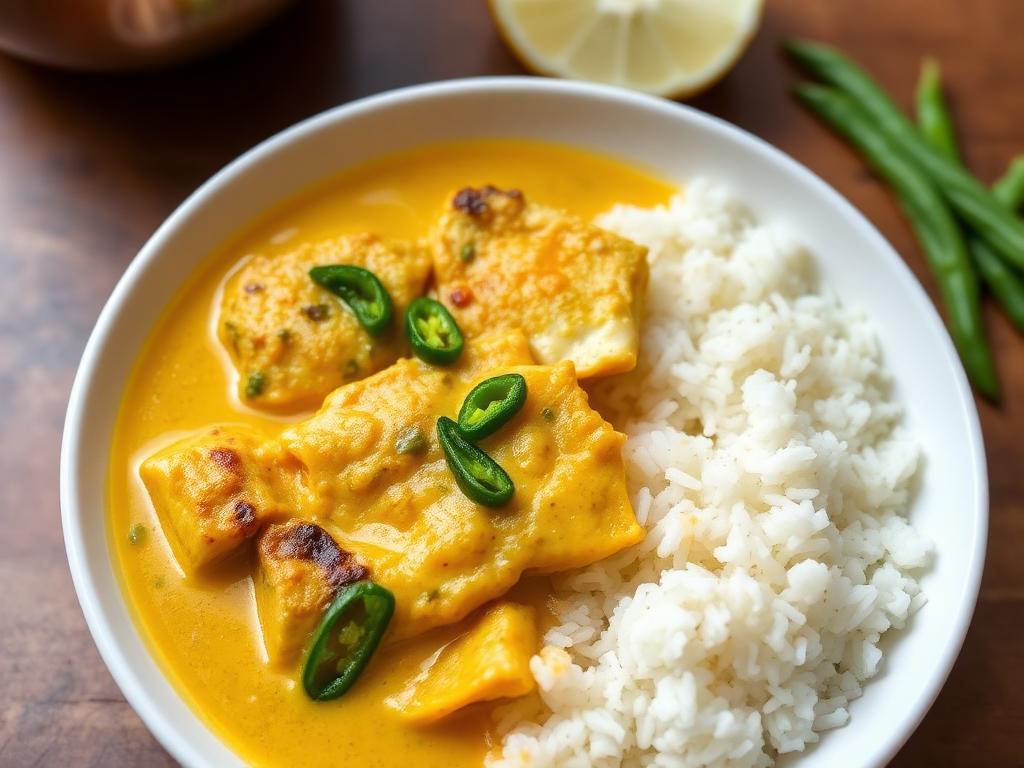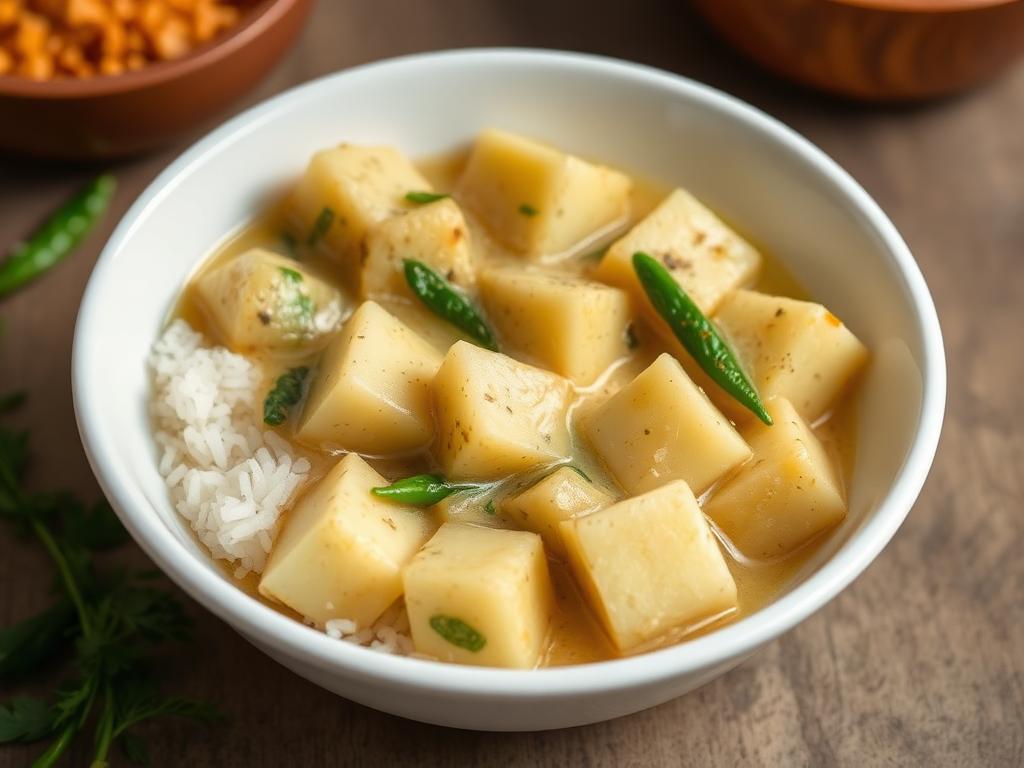
Chilli is a 500-year-old guest
Before the Portuguese landed in Goa in 1498, Indian heat came from long pepper and black pepper. The chilli that now defines Andhra and Kolhapur cooking is a newcomer that arrived from Mexico.
Rasa Bharat · Kitchens of India
5,000 years, encoded in every morsel.
A spice route that started in your kitchen.
Seven regions. One long, unbroken meal.
Food as medicine, long before it was a trend.
The pantry desk
Type what's actually in your kitchen. We'll rank the regional dishes you're closest to — then show you what happens when that same masala lands in a taco, a broth bowl or a flatbread pizza.
Cook from my pantryCoconut on the coast. Mustard oil in the east. Millets across the dry plateau.
Everything here is organised the way the country actually cooks: by region, by grain, by the spice that carries the dish, and by the medicine hidden inside the seasoning. Start anywhere — the map, the masala dabba, or whatever is left in your fridge tonight.
The long meal
c. 7000 BCE
Barley, wheat and cattle at Mehrgarh; the first Indian kitchen.
01c. 2500 BCE
Harappan cities trade sesame, mustard and the earliest known curry residue.
02c. 1500 BCE
Vedic texts name ghee, honey, rice and the ritual of feeding a guest.
03c. 300 BCE
Ayurveda codifies the six tastes and food as medicine.
041st c. CE
Roman ships pay gold for Malabar pepper; the spice trade is born.
051200s
Persian and Central Asian technique meets north Indian dairy and wheat.
061498
Portuguese ships bring chilli, potato, tomato, cashew and papaya.
07Today
The millet revival returns India's oldest grains to modern plates.
08Before the Portuguese landed in Goa in 1498, Indian heat came from long pepper and black pepper. The chilli that now defines Andhra and Kolhapur cooking is a newcomer that arrived from Mexico.
Crystallised sugar was invented in the Gupta-era Gangetic plains. 'Sharkara' travelled into Arabic as sukkar and into English as sugar — the whole world's sweetness carries an Indian name.
Food historians trace the fermented steamed cake to trade with the Indonesian archipelago around the 8th century, where cooks were already steaming fermented rice batters.
A tadka works because curcumin, capsaicin and the aromatics in cumin and mustard are fat-soluble. Thirty seconds in hot ghee extracts more flavour and more nutrition than an hour of boiling.
Ragi, jowar and bajra were domesticated here 4,000 years ago and remained the daily grain until 1960s wheat-and-rice policy pushed them aside. India now grows around 40% of the world's millets.
Piperine in black pepper raises curcumin absorption dramatically. Indian kitchens paired the two for centuries before laboratories worked out why haldi-and-kali-mirch belongs together.
No Indian kitchen uses a single all-purpose 'curry powder'. Each household grinds a masala per dish; the jar on Western shelves is an 18th-century British export invention.
Dosa batter, dhokla, gundruk, kanji and pickles are living cultures. Long before probiotics were marketed, Indian regional cooking ran on wild-yeast and lactic fermentation for preservation and gut health.
Ayurveda at the stove
A South Indian sadya is not a buffet — it is a prescription. Sweet, sour, salty, pungent, bitter and astringent are served in a fixed order so digestion is kindled, cooled and closed in one sitting.
Warm, oily, grounding food — khichdi, ghee, root vegetables, ginger and cooked grains.
Ease off: Cold, raw, dry and irregular meals.
Cooling and sweet — coconut, cucumber, ghee, fennel, mint, rice and bitter greens.
Ease off: Excess chilli, fried food, sour pickles at noon.
Light, warm, spiced — millets, lentils, black pepper, turmeric, honey and steamed food.
Ease off: Heavy dairy, sugar, cold sweets, daytime naps after eating.
Rasa 01
Sweet
Grains, milk, ghee, jaggery — builds tissue and calms Vata and Pitta.
Rasa 02
Sour
Tamarind, kokum, curd, lime — kindles digestion and holds a dish together.
Rasa 03
Salty
Rock salt and sea salt — carries flavour inward and aids absorption.
Rasa 04
Pungent
Chilli, ginger, pepper, mustard — heats, clears channels, sparks agni.
Rasa 05
Bitter
Fenugreek, karela, neem — cools, detoxifies, resets the palate.
Rasa 06
Astringent
Lentils, turmeric, unripe banana — dries, tightens, closes a meal.
The map
Click a zone to travel there
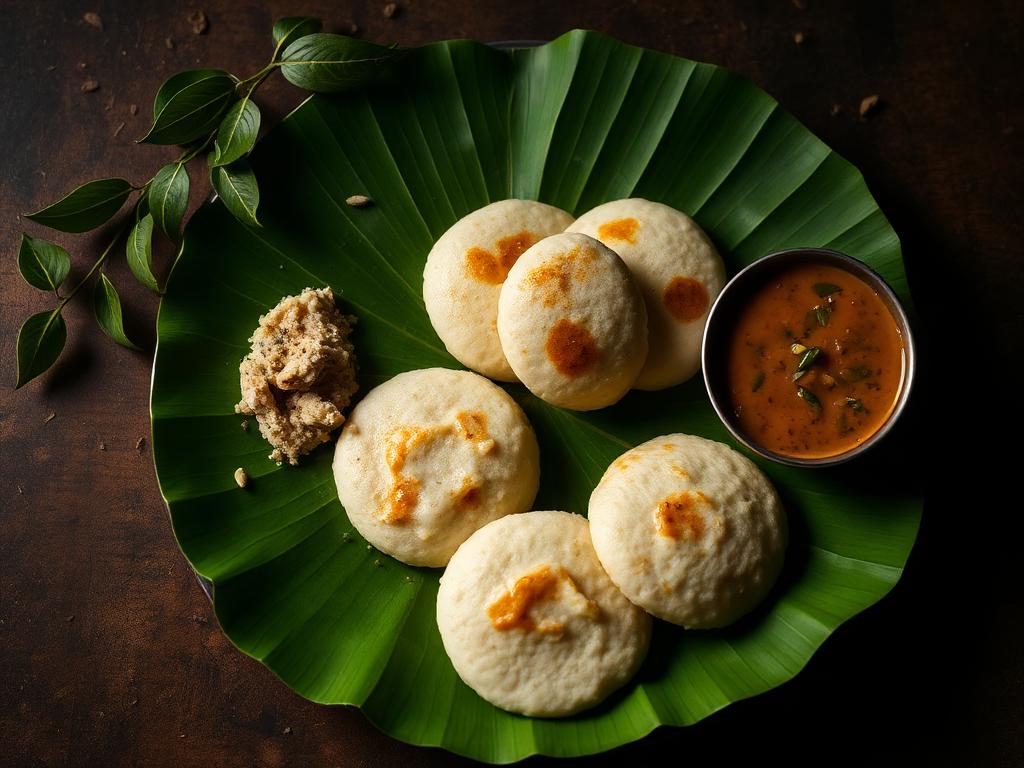
Rice in every form — steamed, ground, fermented, flattened. Coconut as oil, milk and fresh scrapings. The tadka of mustard seeds, curry leaves, urad dal and asafoetida in hot oil is the region's signature sound and smell.
Grown here
Eaten here
Idli sambar · Bisi bele bath · Ragi mudde · Pesarattu
Idli and dosa batter is a wild-yeast ferment — India was eating cultured food daily for a thousand years before probiotics had a name.
Explore South India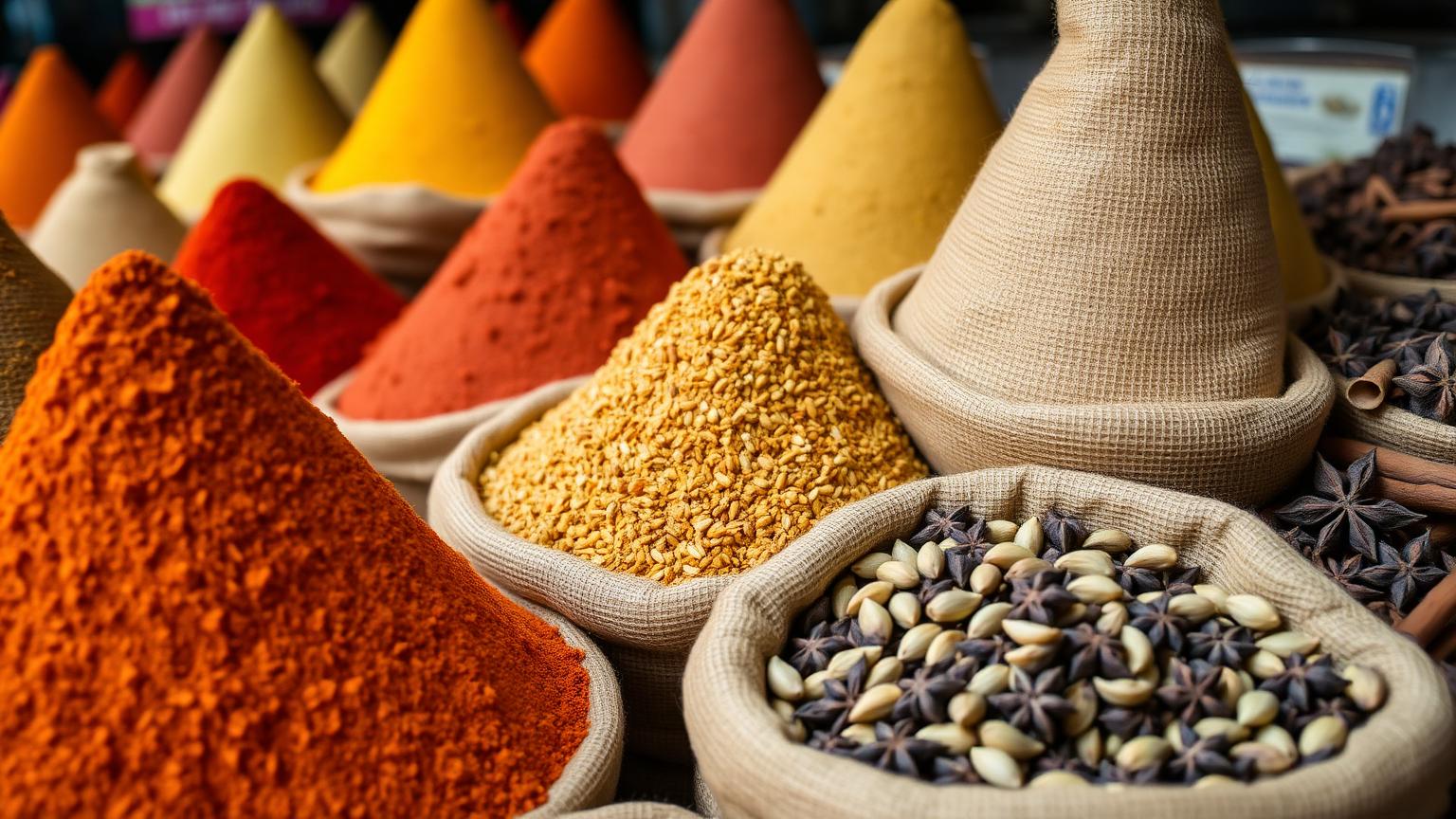
The masala dabba
Each spice has a job and a moment — bloomed in fat, ground at the end, or held back for the finish. The library lists origin, flavour, heat and the ayurvedic reasoning behind all 24 of them.
Open the spice library