The oldest evidence of Indian cooking is not a recipe but a stain. Starch grains recovered from cooking vessels at Farmana, a Harappan site in Haryana, carry traces of turmeric, ginger and aubergine — the same three ingredients a cook in that region might reach for this evening. Whatever was in that pot around 2500 BCE was recognisably the ancestor of a sabzi.
By the time the Vedic texts were compiled, food had acquired a philosophy. The Rigveda describes barley, milk, ghee and honey; the later Ayurvedic compendia of Charaka and Sushruta laid out a working theory of nutrition — six tastes (shadrasa), three constitutional types (doshas), and the idea that a meal should be composed rather than merely assembled. Sweet, sour, salty, pungent, bitter and astringent were to appear in a single sitting, in an order that eased digestion.
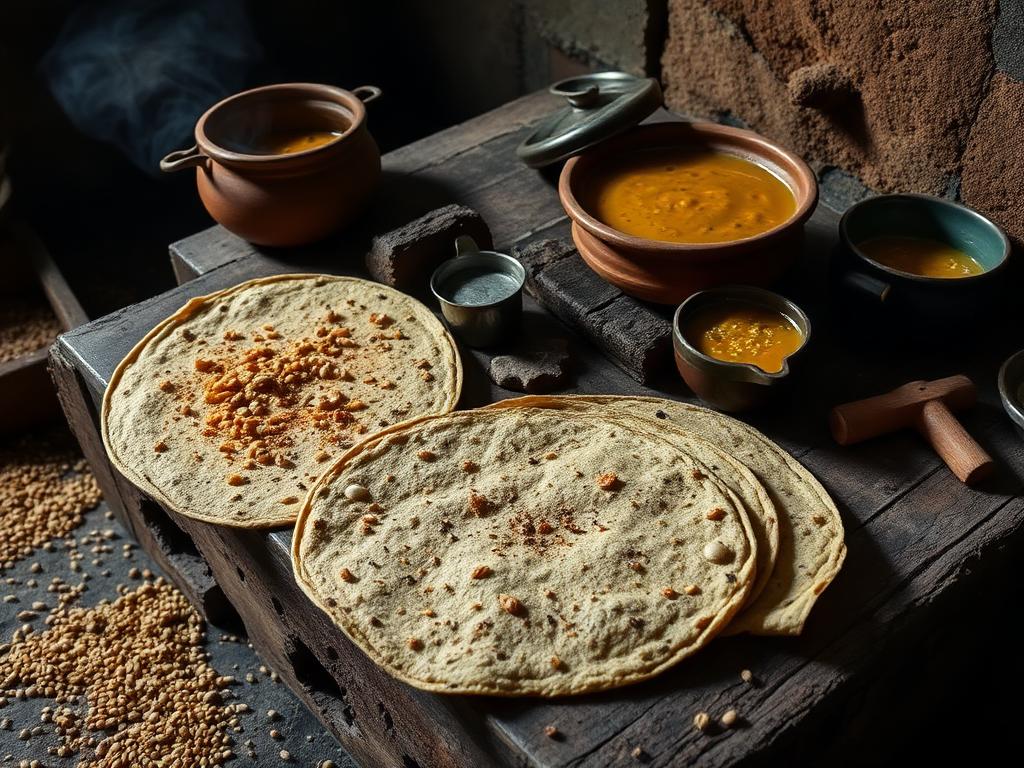
Turmeric, ginger and aubergine in a Harappan pot: the sabzi is older than the alphabet that names it.
Grains came first and stayed. Barley and wheat in the northwest; rice along the Ganges and the eastern deltas; and across the drylands of the Deccan and central plateau, the millets — kodo, kutki, foxtail, finger millet — domesticated in India itself and grown without irrigation. These were not poverty foods. They were the correct crop for the soil and the rainfall, and a cuisine grew around each one.
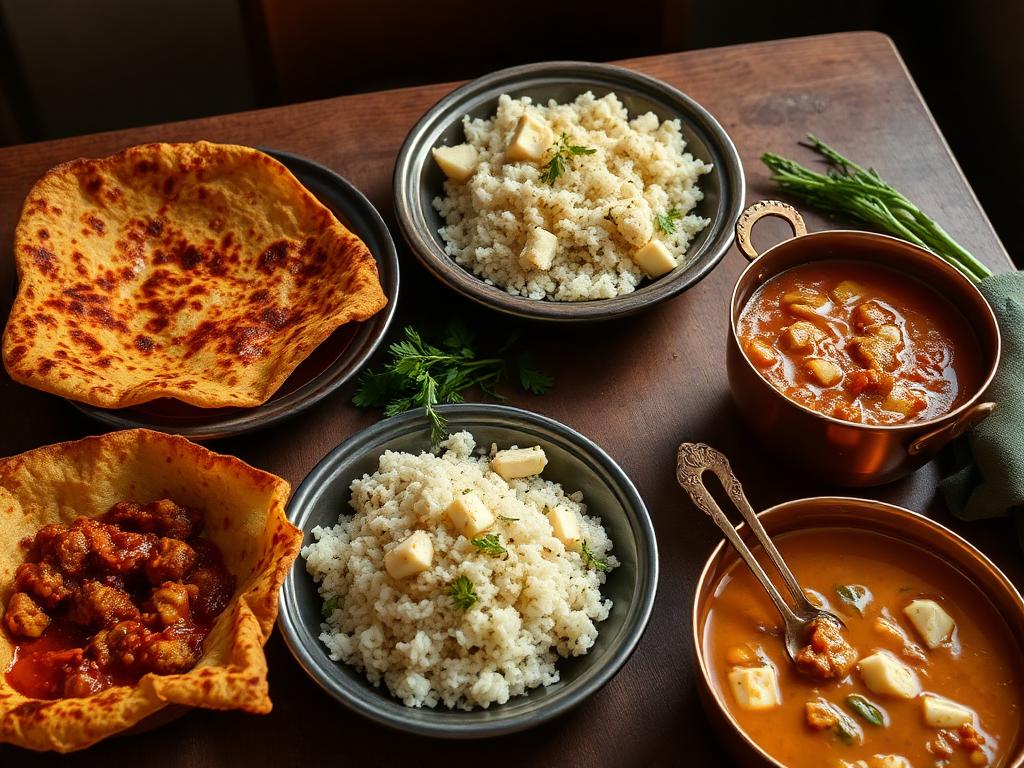
The Sangam poems of Tamil country, written roughly two thousand years ago, already describe tamarind-soured stews, pepper, rice measured out for guests, and the courtesy of feeding a traveller before asking his business. Hospitality was codified before the recipes were.