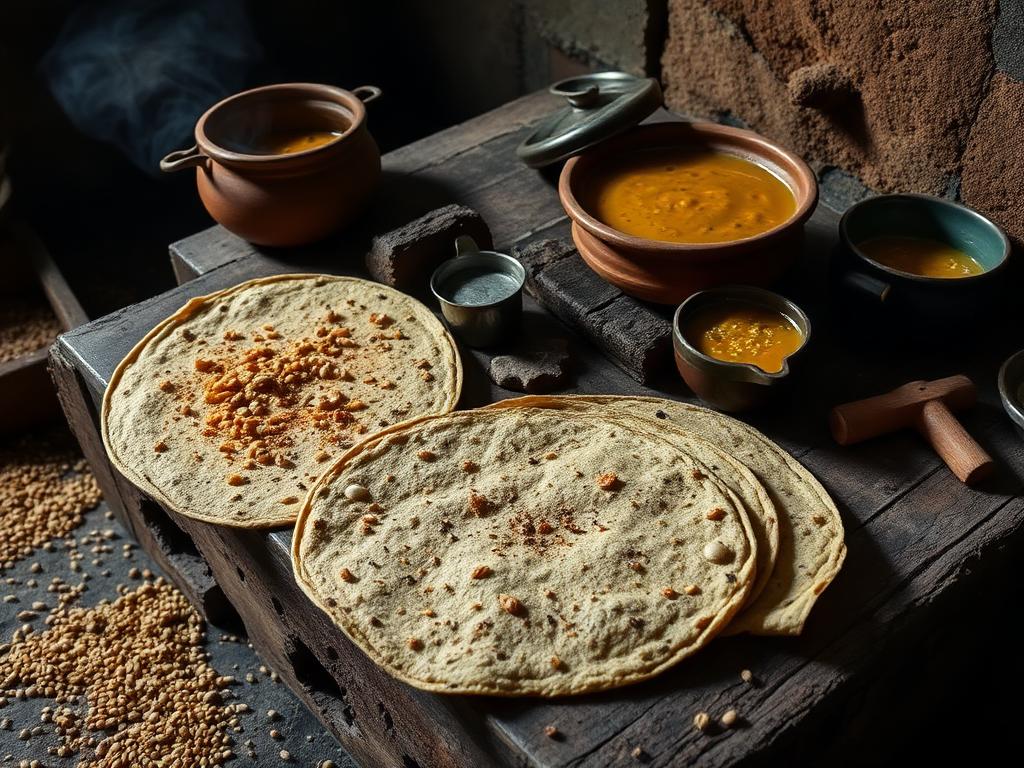
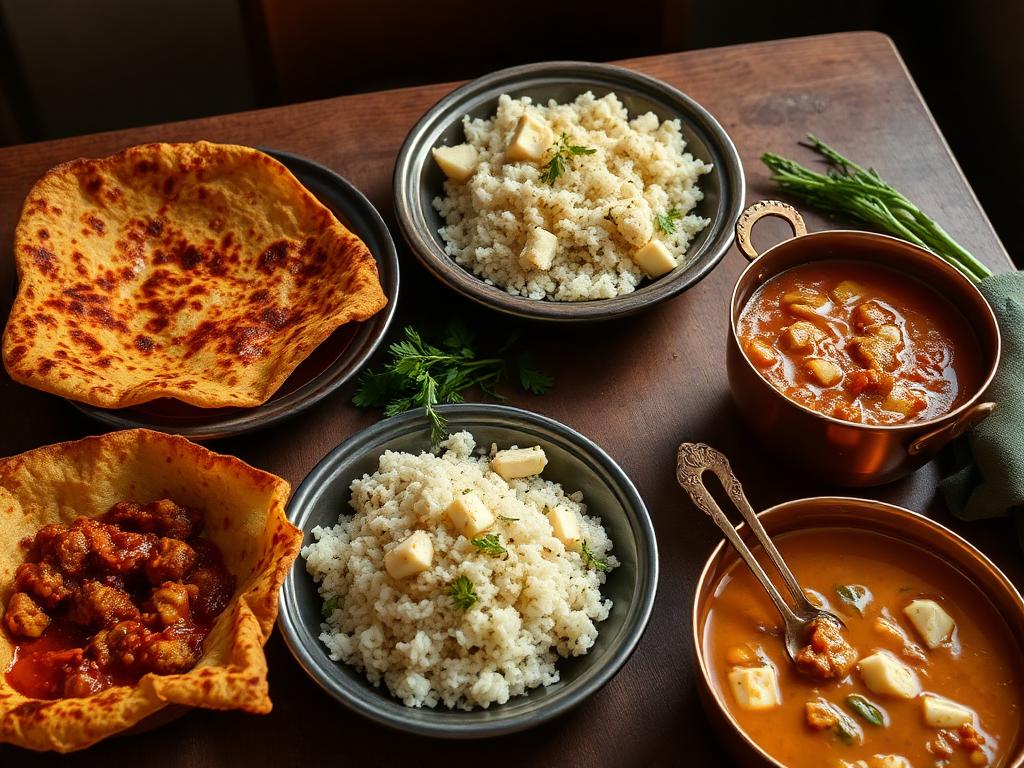
When Central Asian and Persian cooks arrived with the Delhi Sultanate, they brought a repertoire built on meat, dried fruit, nuts and gentle aromatics into a land of rice, ghee, yoghurt and a spice cabinet they had never imagined. What resulted was neither Persian nor purely Indian.
The signature technique was dum pukht — food sealed in a heavy pot with a rope of dough and left over dying coals, so that nothing escapes. Legend has it that Nawab Asaf-ud-Daula of Awadh commissioned enormous cauldrons of dum-cooked food during the 1784 famine, feeding labourers who were building the Bara Imambara through the night. Whether or not the story is embroidered, it explains why Lucknow's cooking still prizes patience over fire.
Dum pukht is not a recipe. It is an argument that time is an ingredient.
The Mughal court refined without inventing from nothing: birista, the browned onion; korma, meat braised in yoghurt; the layered kacchi biryani, where raw marinated meat and par-boiled rice finish together under a seal. Awadhi cooks pushed further into subtlety — galouti kebabs soft enough for a toothless nawab, ittar and vetiver perfuming the rice.
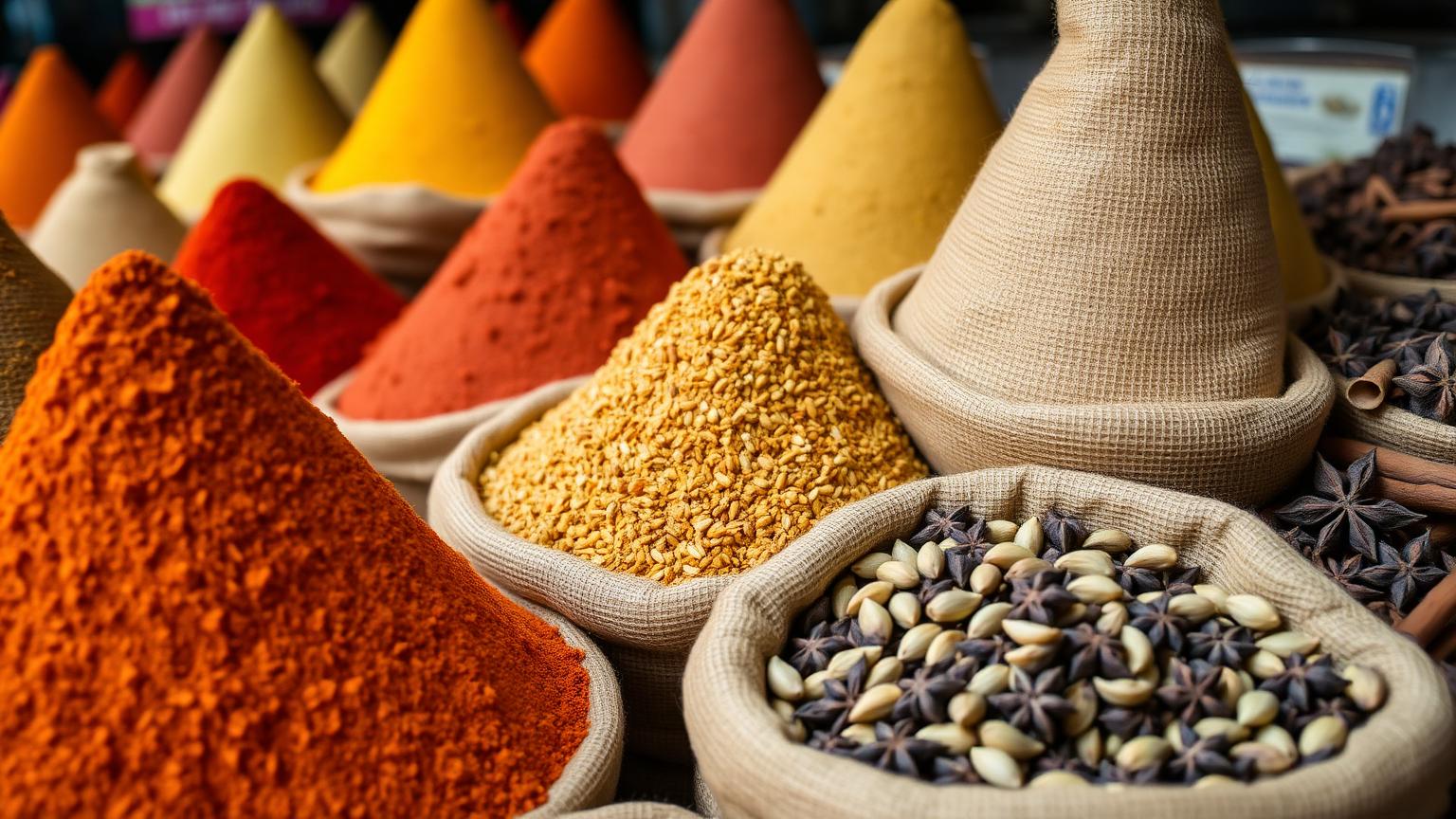
Regional courts answered with their own grammar. Hyderabad's Nizams blended Persian technique with Telugu tamarind and chilli. Kashmir's wazwan grew to thirty-six courses. Bhopal and Rampur each kept their own recipes as closely guarded as state papers.