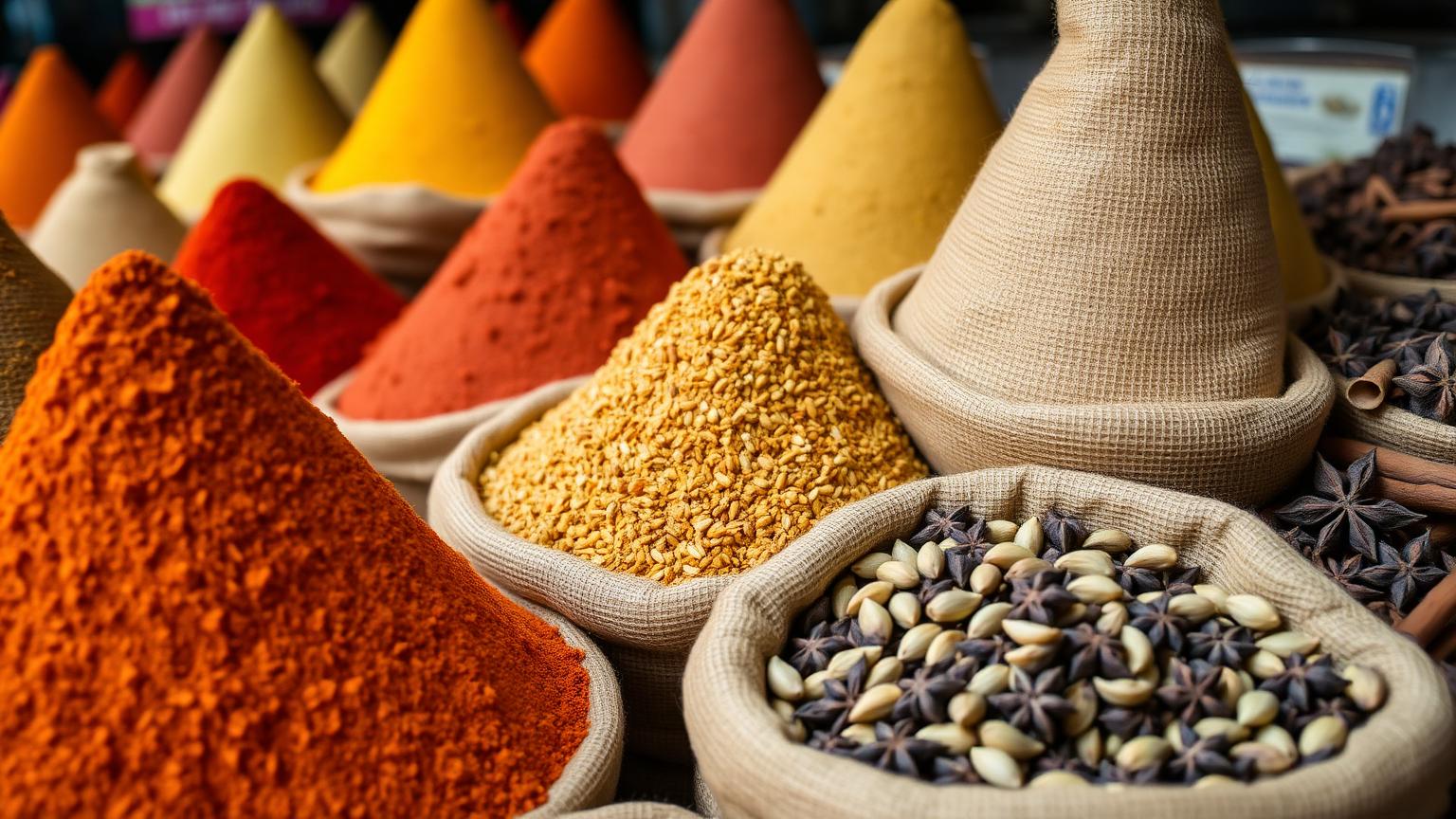
Pliny the Elder grumbled in the first century CE that India was draining Rome of fifty million sesterces a year, and much of it went on pepper. Roman coin hoards still turn up in Tamil Nadu. The Malabar coast's black pepper was the single most valuable agricultural product in the ancient world, and the desire for it redrew maps.
Arab dhows carried cardamom and cinnamon west and brought back coffee, which took root in Chikmagalur. Chinese junks left the shore-operated fishing nets that still tilt over Kochi's harbour. And in 1498 Vasco da Gama arrived at Kappad asking, famously, for Christians and spices.
Chilli arrived in the 1500s and conquered the subcontinent in six generations. Nothing else in Indian food moved that fast.
The Portuguese exchange changed Indian food more profoundly than any invasion. Chilli, potato, tomato, cashew, papaya, guava and pineapple all arrived from the Americas through Goan ports in the sixteenth century. Within a hundred and fifty years chilli had displaced long pepper as India's primary source of heat across the entire subcontinent — an adoption so complete that a Guntur farmer today would be astonished to learn the plant is an immigrant.
It is worth holding both facts at once. The spice trade made Indian cooking global, and it also made India a target. The East India Company began as a spice venture. The kitchen and the colony share a supply chain.