Where it comes from
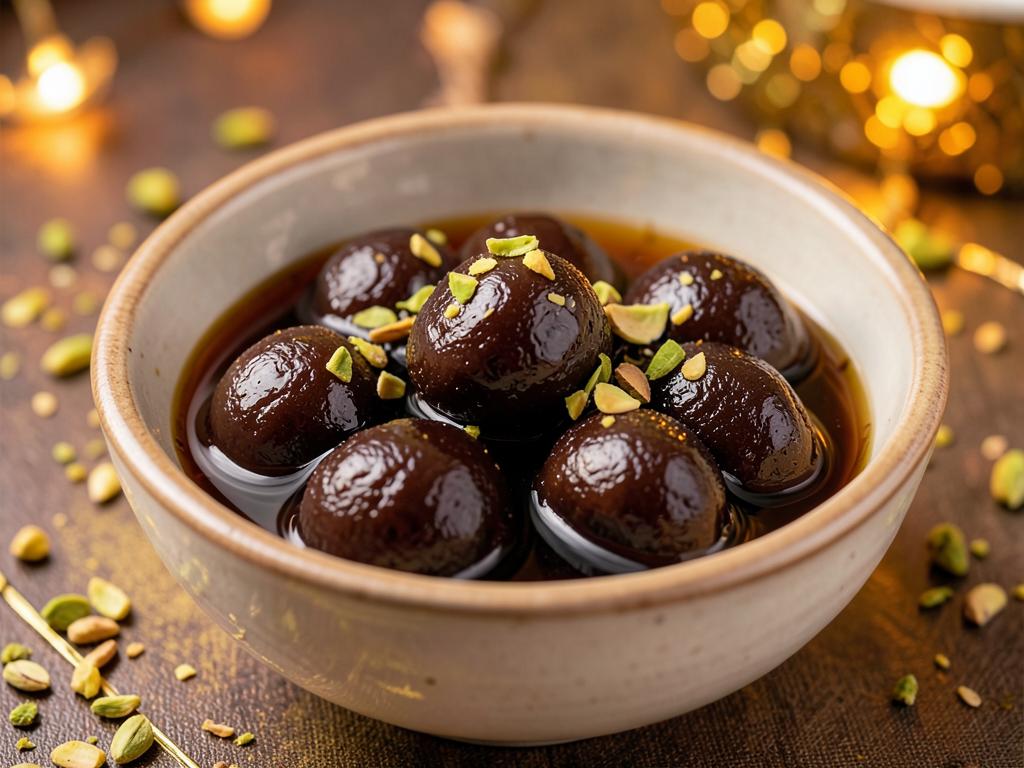
Descended from the Persian luqmat al-qadi, carried into India by Mughal kitchens and rebuilt around khoya — the reduced milk solids that define north Indian sweets. Gulab is rose; jamun is the dark berry it resembles.
Method
- 1
Make a one-string syrup
12:00Boil sugar and water with cardamom and saffron until slightly sticky, then add rose water and keep it warm.
- 2
Bind the dough
10:00Knead khoya, flour and soda with a splash of milk into a smooth, crack-free dough. Do not overwork it.
- 3
Roll flawless balls
08:00Shape small, perfectly smooth balls — any crack will split open in the ghee.
- 4
Fry low and slow
15:00Fry on low heat, moving them constantly, until deep even brown. High heat browns the skin and leaves a raw core.
- 5
Soak
10:00Drop the hot jamuns straight into warm syrup and leave them at least two hours to drink it up.
Cook's notes
- Syrup must be warm, never boiling, when the jamuns go in.
- They double in size — fry in small batches with room to swim.